
Liquid Plasma 101: Benefits, Results & How To Use It

Skincare trends come and go, but every now and then a true technological leap emerges that redefines how we treat persistent skin struggles. Liquid plasma is one of those breakthroughs.
If you’ve been trapped in a cycle of acne, chronic redness, and barrier damage, you’ve likely tried dozens of products that strip or dry out your skin. Liquid plasma takes the opposite approach: instead of applying harsh actives that attack your barrier, it uses ionized energy infused in liquid to shift the skin’s biological environment toward healing.
Let’s break down what liquid plasma actually is, what published scientific research says about how it impacts the skin, and why it might be the ultimate solution for acne, sensitivity, and post-procedure repair.
What Is Liquid Plasma?
In physics, plasma is the fourth state of matter - a gas that has been energized until its atoms ionize, releasing a cloud of free electrons, ions, and reactive molecules. In dermatology, Cold Atmospheric Plasma (CAP) - a non-thermal, room-temperature form of plasma, has long been studied in clinical settings for sterilizing wounds, accelerating tissue repair, and calming inflammation.
Liquid plasma translates this physical phenomenon into a shelf-stable topical format. Through specialized high-energy processing, plasma's active energy species are dissolved into a purified water base. This eliminates the need for expensive clinical plasma devices while delivering the same biological mechanisms directly to your skin at home.
Unlike Platelet-Rich Plasma (PRP), which uses components isolated from your blood - or plasma fibroblast pens that burn micro-dots into the skin, topical liquid plasma is non-thermal, non-invasive, and non-irritating.
The Science: 4 Ways Research Shows Liquid Plasma Transforms Skin
While liquid plasma might sound like a futuristic beauty trend, the biological mechanisms behind Cold Atmospheric Plasma (CAP) and plasma-treated aqueous solutions are backed by extensive clinical research.
1. Microbiome Rebalancing & Selective Antibacterial Action
Traditional acne products like benzoyl peroxide act like a chemical nuclear option - wiping out good and bad bacteria alike. Plasma technology operates through targeted physical oxidation.
The Research: In a study published on skin microbiome changes following plasma treatment researchers (Watanabe et al. 2025), used next-generation genomic sequencing to track bacterial shifts on facial skin.
Key Finding: Within 24 hours of treatment, the relative abundance of pathogenic cutibacterium acnes (C. acnes) dropped dramatically from 31.2% down to 16.2%, while beneficial resident bacteria like staphylococcus epidermidis were preserved. Overall microbial diversity improved significantly, demonstrating that plasma sanitizes acne-causing pathogens without destroying the resident microbiome.
2. Accelerated Tissue Repair & Re-Epithelialization
When the skin barrier is damaged by breakouts, harsh exfoliants, or clinical procedures, cellular migration slows down. Plasma delivers Reactive Oxygen and Nitrogen Species (RONS) that act as a cellular "wake-up call."
The Research: Comprehensive scientific reviews in dermatology (Tan et al. 2022) evaluate plasma’s impact on skin regeneration and cutaneous micro-circulation.
Key Finding: Low-dose plasma RONS induce a beneficial biological signal called oxidative eustress. This increases capillary blood flow, elevates tissue oxygen saturation, and stimulates integrin-dependent pathways in keratinocytes. The result is significantly faster re-epithelialization - meaning new skin cells cover acne lesions, scratches, and post-procedure wounds faster with less scarring.
3. Deep Delivery Through "Plasmaporation"
The main challenge in topical skincare is getting active ingredients past the stratum corneum (the skin's tough outer shield). Plasma solves this through temporary structural opening.
The Research: A study published in Applied Sciences (Lee et al. 2021) and supported by broader delivery reviews (Chen et al. 2025) investigated plasma's effect on skin permeability.
Key Finding: Plasma irradiation temporarily reorganizes intercellular lipids in the upper epidermal layer, creating micro-passages in a process known as “plasmaporation”. The study measured a 250% increase in transdermal penetration of active molecules without causing cell death or structural damage, allowing liquid plasma and accompanying skincare nutrients to absorb much deeper.
4. Direct Anti-Inflammatory Effects & Redness Reduction
For conditions like rosacea, eczema, and inflamed acne, chronic redness is driven by hyper-reactive immune responses in the skin tissue.
The Research: In a prospective randomized controlled trial published in Dermatology (Hofmeyer et al. 2023), researchers evaluated daily plasma application on patients suffering from inflammatory rosacea.
Key Finding: The plasma-treated side demonstrated a statistically significant reduction in active inflammatory lesions and a significant decrease in erythema (redness) size compared to the untreated control side. Patients also reported a marked improvement in their quality of Life scores, proving plasma’s ability to calm stubborn inflammatory flushing.
What to Expect During the First Month
Switching to a product that alters skin cell signaling comes with a brief adjustment period:
Days 1–3 (The Initial Tingle): You may feel a slight, fleeting tingling sensation upon application. This is the active RONS interacting with skin tissue. Within a few minutes, it subsides into a cool, soothing feeling.
Days 4–10 (The Transition Phase): If you have trapped congestion beneath the surface, liquid plasma may accelerate its movement upward. This temporary "purging" happens because cell turnover and cellular migration are speeding up.
Days 10–14 (Calm & Balance): Diffused redness begins to fade, active blemishes resolve faster, and the skin barrier feels significantly less reactive.
Day 30+ (Structural Integrity): Skin texture feels smoother, moisture levels remain stable throughout the day, and overall barrier resilience is elevated.
Skin Concerns That Benefit Most
Acne & Breakouts: Zaps acne-causing bacteria on contact without stripping your skin, calms painful red bumps, and helps prevent leftover dark spots before they can even form.
Sensitivity & Rosacea: Quietly turns down the volume on redness and stinging, repairs your natural skin barrier, and soothes angry flare-ups - all without heavy, pore-clogging oils.
Post-Procedure Recovery: Fast-tracks your skin's healing process after peels, lasers, or microneedling so you can ditch the post-treatment redness and downtime way faster.
Esthetician’s Top Pick: Medipair Plasma 4-Piece Pouch Set
While liquid plasma technology is expanding, Medipair has pioneered one of the most effective daily formulations on the market. Their plasma products utilize a patented aqueous stabilization process to infuse active plasma directly into purified water.
Liquid Plasma: Delivers reactive energy species to oxidize target bacteria and increase skin permeability.
Green Tea Extract: Neutralizes oxidative stress and subdues inflammatory flushing.
Thyme Extract: Provides natural antibacterial and purifying support to keep breakouts under control.
Allantoin: Deeply soothes irritation, speeds tissue repair, and reinforces the moisture barrier.
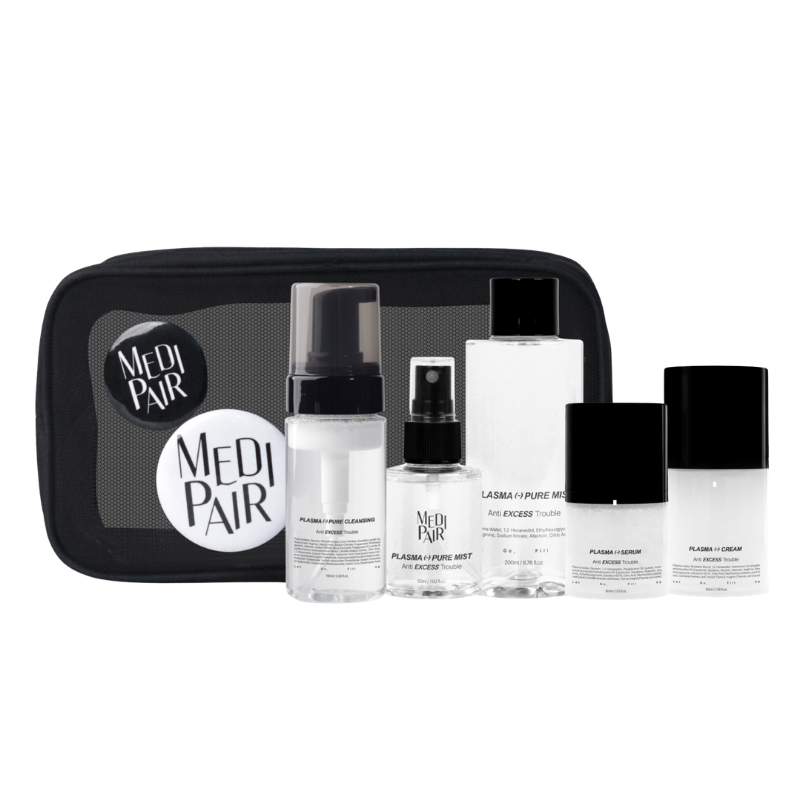
The ultimate high-potency recovery system engineered to target active breakouts, soothe deep inflammation, and accelerate total barrier repair in acne-prone skin.
Plasma 4-Piece Pouch Set Includes:
The Takeaway
Liquid plasma is a breakthrough, non-stripping approach to persistent acne, redness, and inflammation. By delivering stabilized cold plasma species directly into purified water, it targets harmful bacteria and calms irritation - allowing your barrier to repair from within without the harsh drying effects of conventional active ingredients.
Microbiome-Friendly Healing: Selectively neutralizes harmful acne bacteria while protecting the healthy microbes essential for a strong skin barrier.
Deep Anti-Inflammatory Action: Rapidly reduces erythema, swelling, and sensitivity, making it ideal for rosacea, sensitive skin, or post-treatment care.
Zero Barrier Damage: Achieves clinical-level results without relying on drying acids or harsh retinoids.
Consistent Progress: Mild initial tingling and brief purging are normal as trapped congestion clears.
Frequently Asked Questions
-
Initial redness or purging is completely normal during the first 10–14 days. Mild redness immediately after application often indicates that the plasma is interacting with bacteria and shifting the skin into repair mode. Stick with a simple routine (like the 4-piece set) and allow your skin time to clear out underlying debris before adding other products in.
-
In-clinic plasma treatments (like plasma pens or cold plasma wands) deliver concentrated energy in short bursts, often requiring minor downtime. Liquid plasma offers a gentler, daily-maintenance version that yields cumulative, long-term barrier improvements without any clinical downtime or pain.
-
While liquid plasma cannot regulate internal hormone fluctuations, it drastically reduces the visible severity of hormonal flare-ups by eliminating surface bacteria and calming the intense inflammation associated with deep, painful breakouts.
-
Yes! Liquid plasma is non-toxic, non-stripping, and free from harsh chemical exfoliants. You can safely use it morning and evening. While you might feel a brief tingling sensation upon first application, it quickly settles into a cooling, soothing feel.