
Microneedling & The Healing Cascade: Your Skin’s 3-Month Transformation Journey
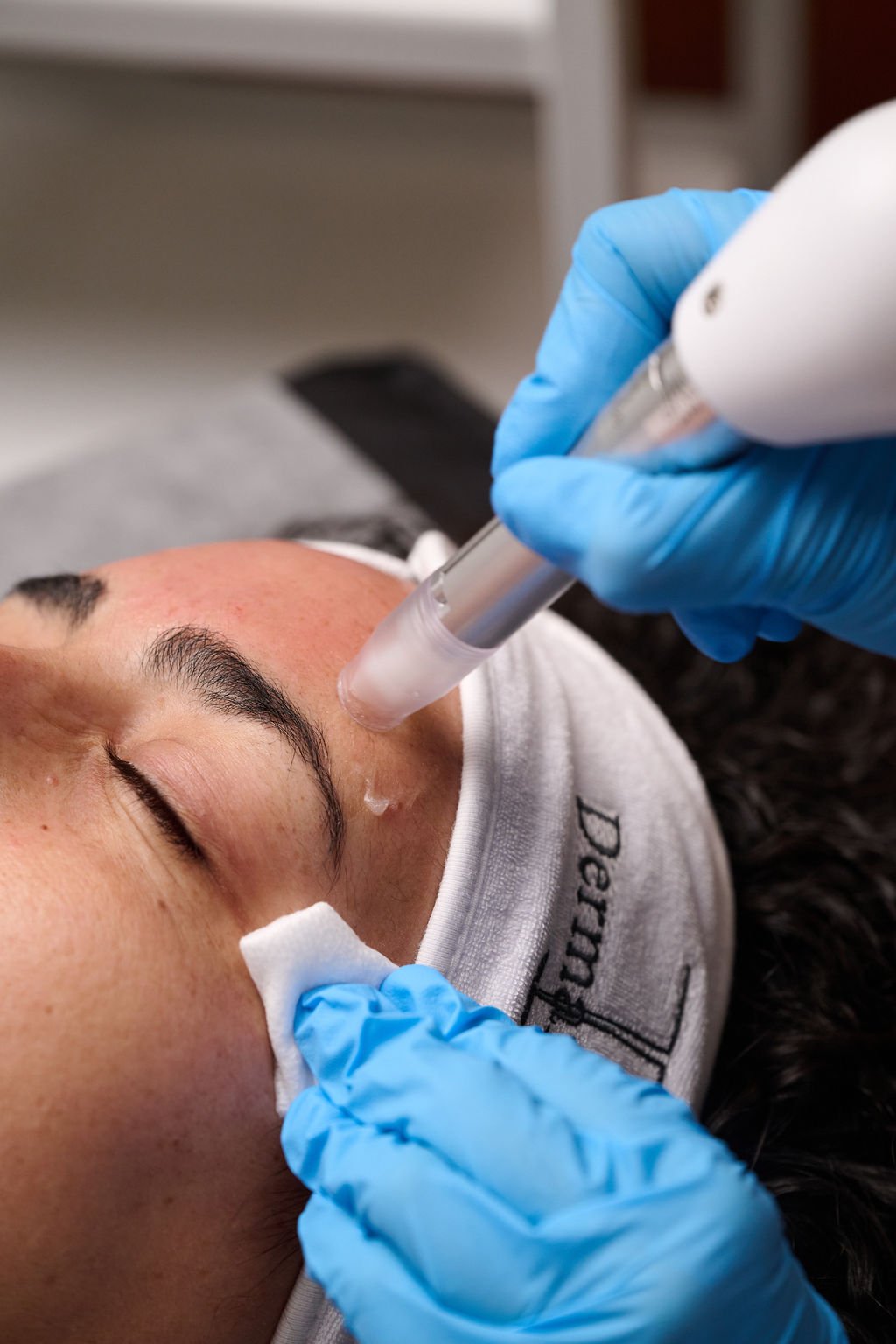
Microneedling (also known as Collagen Induction Therapy or CIT) has become a gold standard in non-invasive skin rejuvenation. While the in-clinic treatment takes under an hour, the real transformation happens quietly beneath the surface over weeks and months.
Unlike lasers or chemical peels that use thermal or chemical energy to remove outer layers of skin, microneedling uses ultra-fine, medical-grade needles to create thousands of controlled microscopic punctures (micro-channels) in the dermis. This tricks the skin into thinking it has sustained an injury, triggering a highly orchestrated biological response known as the wound healing cascade.
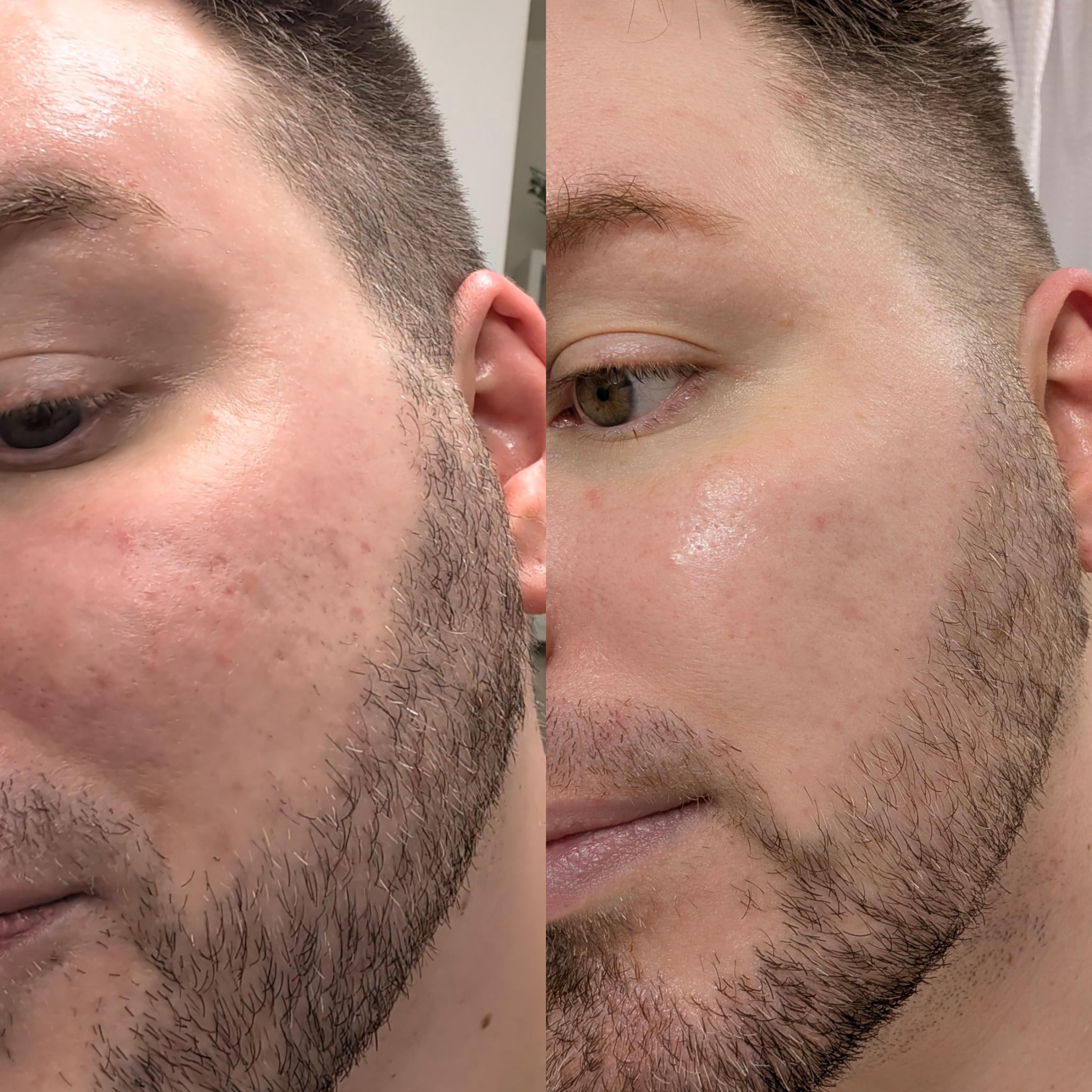
Before & After
The 4 Stages of the Wound Healing Cascade
Understanding what happens beneath your skin after treatment reveals why results build over time rather than overnight.
1. Hemostasis (Immediate to 24 Hours)
The second the microneedles penetrate the dermis, the body activates its immediate defense system:
Platelet Aggregation: Platelets rush to the microscopic wounds to form a temporary fibrin mesh, stopping any pinpoint bleeding or fluid leakage.
Growth Factor Release: Activated platelets release crucial chemical messengers, including Platelet-Derived Growth Factor (PDGF), Transforming Growth Factor (TGF), and Epidermal Growth Factor (EGF).
Signal Activation: These chemical signals broadcast a cellular "call to action" to recruit immune cells and structural repair cells to the area.
2. Inflammation (Days 1 to 3)
While "inflammation" often sounds negative, in controlled settings it is the indispensable engine of skin renewal:
Debris Clearance: White blood cells (neutrophils and macrophages) migrate to the micro-channels to clear out dead cellular debris and neutralize potential pathogens through phagocytosis.
Secondary Signaling: Macrophages act as project managers, continuing to release growth factors that instruct skin cells to begin structural repairs.
Clinical Symptoms: This phase manifests visibly as mild erythema (redness, similar to a moderate sunburn), slight warmth, minor swelling (edema), and localized tightness.
3. Proliferation (Days 3 to 21)
Once the treatment area is clear, the body transitions from defense to active reconstruction:
Fibroblast Activation: Fibroblasts, the primary collagen-producing cells in the skin proliferate rapidly and begin synthesizing new Extracellular Matrix (ECM) components.
Early Collagen Production: The skin initially lays down Type III Collagen (a delicate, youthful form of collagen) along with elastin fibers and glycosaminoglycans (like natural hyaluronic acid).
Angiogenesis: New microscopic capillary networks form, restoring robust blood flow, oxygenation, and nutrient delivery to the renewing tissue.
Clinical Symptoms: Surface redness fades, skin turnover accelerates, and the skin begins to look plumper and brighter.
4. Remodeling & Maturation (3 Weeks to 3 Months)
This is the longest and most transformative phase of the entire process:
Collagen Conversion: The initial Type III collagen is gradually replaced by Type I Collagen - the strong, tightly woven collagen responsible for firm, resilient, and youthful skin architecture.
Lattice Cross-Linking: Collagen fibers align themselves along natural tension lines, creating a dense, organized supportive network within the deep dermal layers.
Tissue Refinement: Indented scars (acne scars), enlarged pores, and fine lines begin to fill in from beneath as the dermal matrix thickens.
Visible Results Timeline: What to Expect
| Timeline | What's Happening Beneath The Surface | What You See & Feel |
|---|---|---|
| Days 1-2 | Active inflammatory response & macrophage clearance | Pink/red skin, feeling of tightness, minor heat or localized swelling |
| Days 2–4 | Epidermal turnover & initial fibroblast proliferation | Mild flaking/peeling, returning to normal skin color |
| Weeks 1–4 | Early type III collagen synthesis & angiogenesis | Improved radiance, smoother texture, subtle plumpness |
| Months 2–3 | Type I collagen maturation, cross-linking & remodeling | Softer fine lines, reduced acne scar depth, firmer and denser skin |
Maximizing Your Results: Aftercare & Protocol
Because microneedling creates open micro-channels, your post-treatment care directly impacts your final outcome.
Protect the Barrier (First 24 Hours): Avoid direct sun, heavy sweating, hot showers, saunas, and makeup. Apply only esthetician-approved post-procedure products.
Pause Active Ingredients: Pause retinoids (retinol/tretinoin), exfoliants (AHAs/BHAs), and strong Vitamin C formulas for 3 to 5 days post-treatment to avoid chemical irritation within the open channels.
Prioritize Hydration & Barrier Repair: Support the proliferative phase with lipid-replenishing ceramides and fatty acids.
Non-Negotiable Sun Protection: Newly formed skin cells are vulnerable to UV damage and post-inflammatory hyperpigmentation (PIH). Apply a broad-spectrum SPF 30+ daily.
Space Treatments Correctly: For optimal results, schedule sessions 6 weeks apart. This allows each healing cascade to complete its proliferative phase before starting the next cycle.
The Takeaway
Navigating post-treatment skin transformation requires understanding that microneedling isn't an overnight fix - it is a deliberate catalyst for long-term structural renewal. By leveraging your body's natural 4-phase wound healing cascade, Collagen Induction Therapy builds healthier, denser dermal tissue from within over 90 days. Keep these core principles in mind to guide your treatment journey:
Triggered Regeneration: Microneedling relies on mechanical, controlled micro-injuries to kickstart the body's natural wound healing cascade without damaging the epidermis.
4-Phase Process: Healing occurs in four distinct steps - hemostasis, inflammation, proliferation, and remodeling.
Long-Term Benefits: While surface healing takes less than a week, structural collagen maturation continues for up to 3 to 6 months post-treatment.
Aftercare Matters: Strict sun protection, barrier hydration, and pausing harsh active skincare for a few days ensure safe, optimal healing without pigment complications.
Consistency Wins: A single session yields a healthy glow, but a series of 3–6 treatments spaced 6 weeks apart creates long-lasting dermal density and scar correction.
Frequently Asked Questions
-
While skin cell turnover happens on the surface within 28 days, collagen synthesis is a complex biological process. It takes weeks for fibroblasts to synthesize new Type III collagen, and up to 3 months for that collagen to convert into dense, cross-linked Type I collagen that visibly lifts wrinkles and softens deeper scars.
-
Yes! Controlled acute inflammation is necessary for skin remodeling. The inflammatory signals instruct macrophages and fibroblasts to rebuild damaged skin structures. This is entirely different from chronic inflammation, which breaks down skin tissue over time.
-
Lasers use thermal (heat) energy to break down tissue or stimulate collagen. While effective, thermal energy carries a higher risk of post-inflammatory hyperpigmentation (PIH), particularly in darker skin tones (Fitzpatrick Types IV–VI). Microneedling is mechanical rather than thermal, making it safe and effective across virtually all skin types and tones.
-
For general rejuvenation, brightness, and anti-aging, a series of 3 treatments is typically recommended. For deeper concerns such as pitted acne scars, deep-set wrinkles, or severe hyperpigmentation, a series of 4 to 6 treatments spaced 6 weeks apart usually delivers the best outcomes.